You need more clients. Cold calls, seminar mailers, and a vague "do you know anyone?" are not a system. They are habits. A name in your inbox still has to become a conversation, a meeting that happens, and a signed client.
There is no single channel that fills a calendar on its own. Start by naming who you want to help. Then pick a few ways to meet those people, and give someone on your team time to follow up. Track each step separately so you can see where things stall.
This is a practical order of work. It is not a promise that ads, search, LinkedIn, or a bigger budget will produce clients.
Key takeaways
- Write down a specific kind of person you want to help before you spend on marketing.
- Count contacts, conversations, attended meetings, and signed clients as four different numbers.
- Choose a few channels you can actually follow up on. More names do not create more hours.
- Ask for introductions after a real win, and name the kind of person who would be a good fit.
- Have your firm's compliance reviewer approve ads, emails, outreach, and any client examples before they go out.
Start with who you actually want as a client
Before you buy ads or publish a page, answer this in writing: who do you actually want as a client?
"Anyone with investable assets" gives you nothing to say. Your website, your ads, and your first email all end up generic. Generic pages are easy to ignore.
You do not have to refuse every other person who inquires. Your public marketing should still speak to one primary audience so a real person can recognize themselves.
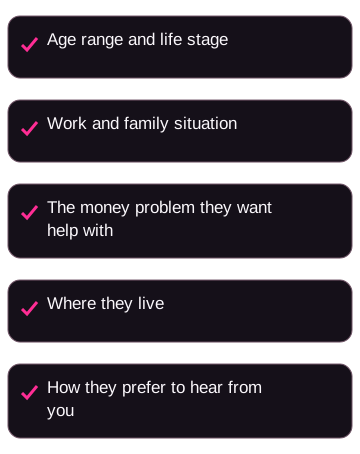
Write one page that covers these five points:
- Age range and life stage: approaching retirement, newly retired, selling a business, or holding company stock
- Work and family situation, including the kind of money they need help managing
- The money problem they want help with, in their own words
- Where they live, so you can plan events and confirm where you can serve them
- How they prefer to hear from you: an article, a call, a trusted introduction, or a form on your site
The tighter this is, the easier the next steps get. An advisor who wants to talk to engineers with company stock can write about vesting and concentrated positions. An advisor who helps "everyone with a future" has a much harder page to write.
That is a writing problem, not a ranking guarantee. Specific pages are easier for the right person to recognize. They are not a promise that those people will hire you.
Audiences some firms choose to write for
You do not need a clever niche name. You need a person you can describe. These are common starting points, and the practical reason each can be easier to write about:
Pre-retirees. The questions are easy to name: income in retirement, taxes, what to do with a workplace plan.
Business owners. The work is often more involved, and they may already have a CPA or attorney you could also know.
Executives with company stock. RSUs, options, and concentrated positions give you a concrete topic, if that is actually who you help.
People going through divorce. The help they want is easy to name, and the timing is usually not theoretical.
Medical professionals. The questions often repeat, and a page can speak to their calendar, not a generic household.
Federal employees. FERS, CSRS, and TSP questions are specific enough that a generic retirement page will not cover them.
Widows and widowers. The situation is specific, and many sites never mention it.
Treat that list as a menu, not research. Pick one primary audience for the website and the ads. Let other good-fit people find you through introductions.
A new contact is not a new client
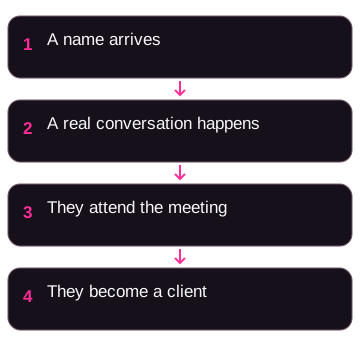
A lead, a booked appointment, and a meeting that actually happens are three different things. A signed client is a fourth.
If you mix them together, a cheap list of names can look like a success while your calendar stays empty. Keep separate counts:
- A name arrives. Someone asked for help or agreed to be introduced.
- A real conversation happens. You find out whether there is a fit.
- They attend the meeting. Count the people who actually show up.
- They become a client. Now you can look at what you spent to get there.
The diagram is a counting method, not a conversion rate.
Use the same definitions for every channel. Otherwise you will compare a Google click with a CPA introduction and think one "doesn't work" when you were measuring two different things.
Digital channels that can send you people
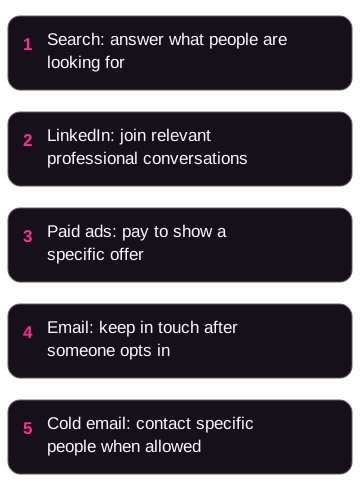
Once you know who you want, match the channel to where that person already looks and how they decide. None of these is guaranteed to produce clients. Each one asks something different of your team.
Search and useful articles
People already type questions into Google. If you publish a clear answer, they can find your firm without you buying that click today.
Search is usually slow at the start. You are waiting on pages to get found, and you cannot honestly promise a timeline. The useful move is to write about the actual question your ideal client is asking, not a generic "financial planning tips" page.
A page on what to do with RSUs when a company goes public is aimed at a specific person. A page on "how to get rich" is not.
Skip word-count targets and a forced publishing calendar. Write the next article when you have a real question to answer, and keep the page updated when the answer changes. Have compliance review what you publish.
If you want the longer version of this channel, read our SEO guide for financial advisors.
LinkedIn is a common place to find professionals, including people who might hire you and people who might introduce you. Confirm your audience is actually there before you pour a lot of time into it. That does not make LinkedIn the best platform. It makes it one option with a specific job: show up with a point of view the right person can repeat.
A simple cadence:
- Post when you have something useful to say about the problems your audience actually has
- Comment on posts from the kind of people you want to meet, before you pitch
- Send connection requests with a note that is about them, not a brochure
- Follow up with something useful, not an immediate ask for a meeting
Pick a pace you can keep. A burst of posts in January and silence until June teaches people nothing.
For the longer version, see our LinkedIn guide for financial advisors.
Paid ads on Facebook, Instagram, and Google
Ads get a bad reputation when they send strangers to a generic homepage and nobody follows up.
Used carefully, ads are how you show up now, instead of waiting to be found. They still do not guarantee appointments or clients.
Facebook and Instagram ads are often used to reach people who were not searching for an advisor today. Ask whoever runs the ads what targeting your account can actually use. The ad still has to match the audience you named, and the page they land on has to continue the same story.
Google Ads are built around the searches people type. A search like "financial advisor for doctors in Austin" is a different job than a broad brand campaign. Ask for the full cost and the terms in writing for the keywords you care about.
Ask the same things of any buyer or vendor: who sees the ad, where they go next, who calls them, what you pay in full, and what happens when someone does not answer.
Do not send ad traffic to a homepage that talks about everything. Send it to a page that matches the ad.
Email after someone raises a hand
Collecting emails and sending nothing wastes the interest you already paid for.
When someone downloads a guide or books a call and then goes quiet, they are often not ready yet. A short sequence of useful emails gives them a way to keep learning without you chasing them by hand every day.
Keep the emails specific to the thing they asked about. A person who wanted help with retirement income does not need a generic market recap.
The longer version is in our email marketing guide for financial advisors.
Cold email
Cold email is still used. Vague email is still ignored.
"I help people with their finances" is easy to delete. "I work with Salesforce engineers who have vested RSUs and want to understand the tax questions around them" is a reason to reply, if that sentence is true for you.
If you go this route, use a list you are allowed to contact, say who you help in one sentence, and have compliance review the copy. The longer outbound notes are in our cold email guide for financial advisors.
Referrals, partners, and rooms that still matter
Digital is not the whole job. Many advisors still meet excellent clients through people they already know. The difference is whether you wait, or you make the next step easy.
Referrals with a real ask
Most referral "strategy" is hoping a happy client mentions you. A clearer ask has three parts: timing, specificity, and an easy next step.
The easier moment is right after a real win: you helped them through a tax question, a retirement decision, or a messy estate issue. That is when you can say: "I'm glad we could sort that. The people who usually hit the same wall are other executives at your company. Would you be comfortable introducing me to one or two of them?"
Specific. Timed. Easy to say yes to.
Give them a short note they can forward if that helps. Then follow up when the introduction actually arrives.
The longer version, including how to track asks, is in our referral marketing guide for wealth managers.
Accountants, attorneys, and other trusted partners
A CPA already sees the tax return. An estate attorney already sees the family complexity. If they trust you, they can introduce you to people who already need the kind of help you sell.
That only works if you make them look good. Offer something their client actually needs, follow up fast when they make an introduction, and stay in touch even when they have not sent anyone this quarter.
Start with a few professionals who already serve your ideal client: CPAs, estate attorneys, business brokers, commercial bankers. You do not need a dozen half-relationships.
Do not budget for a set number of introductions per year. Ask each partner how they prefer to introduce you, what would make them look careless, and how fast you will report back that you followed up.
Seminars, workshops, and webinars
A specific room still works better than a generic "retirement planning" event. "Maximizing your FERS pension and TSP" is a topic a federal employee can say yes to. "Come learn about retirement" is not.
Keep the group small enough that you can talk to people. Follow up quickly: a personal email within a day, a call soon after if they asked for one. Follow up while the conversation is still fresh. Do not wait a week to write.
Online webinars can reach people outside your driving radius. Compare hosting online with the cost of a room. The same rules apply: a specific topic, a clear next step, and fast follow-up. Have compliance review the slides and the invitation.
Networking with a reason to be in the room
Random mixers are usually a line of people selling to each other. If you want business owners, go where business owners already meet: an industry group, a peer forum, an association in their trade.
Give yourself one job for the event: start two or three conversations you would actually continue. Ask what they are dealing with. Follow up with something useful. Do not pitch the table.
Make it obvious who you are
When someone hires an advisor, they are hiring a person they will talk to, not a logo. Your bio, your articles, and the way you explain a problem should match.
You do not need a theatrical personal brand. You need a point of view a stranger can repeat.
- A clear opinion about the problem you solve, not "markets go up and down"
- Content that keeps showing up, even if it is short
- Proof you can actually show: anonymized examples, a walkthrough of how you work, or a page that explains fees without hiding
If you use client results, numbers, or testimonials, treat them as marketing materials. Get your compliance reviewer to approve them before they go live. Do not copy someone else's story. Do not claim a case study is compliant just because you anonymized a name.
Your website is part of this. If it looks like every other advisor site (sunset photos and "your financial future") a visitor has no reason to inquire. Our website design guide for financial advisors covers what to put on the page so someone can decide whether to talk to you.
What the first call is for
Getting the name is only half the cost. The other half is the time you spend on people who will never hire you, and the people who would have hired you if you had followed up.
The first call has one job: help both of you decide whether a second meeting is worth it. It is not a close.
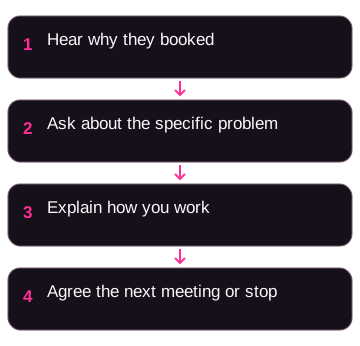
A useful shape for about 30 to 45 minutes:
- Open with their situation. "What brought you in today?" Let them talk. Take notes.
- Ask about the actual problem. If they mentioned RSUs, ask whether they have looked at the tax impact of a concentrated position. You are checking fit, not performing.
- Explain how you work, who you typically help, and what an engagement looks like. Skip the product list.
- If there is a fit, propose a second meeting with a specific agenda. If there is not, say so.
Do not push for a signed agreement on that first call. People who feel bounced into a decision often leave.
Most people need more than one follow-up. That is not a research finding. It is how slow decisions work. A simple sequence:
- After the call, send a short summary with two or three observations about their situation
- A week or two later, send one relevant article you wrote, not a generic third-party clip
- Later, a short note tied to their actual question
- After that, stay reachable without nagging
Email sequences make this less dependent on your memory.
Say how you charge before the prospect has to ask three times. You do not need to be the cheapest. You need to be able to explain the fee in ordinary language.
What it costs you to get a meeting
A cheap lead is expensive if your team spends hours chasing someone who never shows up.
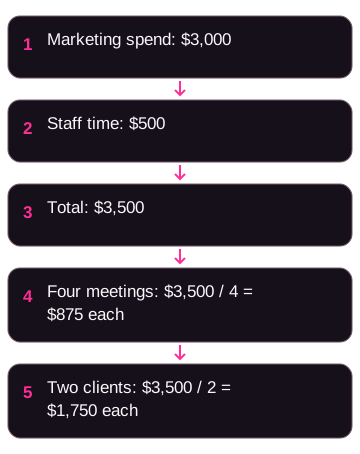
Count the money you spend on the channel and the time your team spends following up. Then divide that total by the meetings that actually happened. Then, separately, divide by the people who became clients.
Here is the math with made-up numbers.
Assume $3,000 in ads or vendor fees in a month, plus 10 hours of follow-up at $50 an hour ($500). That is $3,500 in total cost for this example.
If four meetings happen, that is $875 per attended meeting ($3,500 divided by 4). If two of those people become clients, that is $1,750 per new client ($3,500 divided by 2). If nobody becomes a client, you have spent $3,500 without new business yet.
These are invented figures, not prices, close rates, or results from any channel.
Then ask the next questions with your real numbers: how long until the new client's fees cover that cost, after the cost of serving them? Do not turn assets under management into revenue in your head and call it profit. Use the fees you actually collect, and the time you actually spend.
If you want a wider look at what firms budget, read our financial advisor marketing cost guide. Use it as a way to list cost categories, not as a number you should hit.
Mistakes that waste the money you already spent
These are process mistakes, not a study of advisory practices.
Building the follow-up after the names arrive. The worst time to fix your website, your first-call notes, and your email sequence is while contacts are already hitting the inbox. Set those up first, then start spending on ads.
Betting on one channel. If you only wait on referrals, one quiet season empties the pipeline. If you only buy ads, a targeting change can go quiet overnight. Two or three channels that you can actually staff is more resilient than seven you ignore.
Talking about products instead of problems. "I do portfolio management and financial planning" is a feature list. "I help executives heading into retirement avoid a messy tax bill on their company stock" is a problem a specific person can recognize. Use that second shape only if it is true for your firm.
Stopping after one unanswered email. A person who did not book is often not ready. Follow up with something useful a few times, then leave a door open. Persistence that teaches is different from persistence that nags.
Showing up in bursts. Six articles in January and nothing until summer does not compound. Pick a cadence you can keep on the one or two channels you chose.
Ignoring the cost of delay. Every month you wait is a month you are not learning which messages get replies. You do not need a scare story about lost assets. You need a review date and a budget you can afford to test.
A few common questions
How long does it take to get clients as a new advisor?
There is no honest universal timeline. It depends on whether you already have relationships, how specific your audience is, who follows up, and which channels you actually run.
Set a budget and a review date before you start. Leave enough time to see what happens after the first conversation, not just whether someone booked. A week of unanswered calls is not enough to judge a channel. A contract's minimum term still applies if you bought a vendor.
No channel guarantees a signed client.
What should I start with if I have almost no budget?
Start with work you can do without a media invoice:
- Write the one-page audience description.
- Fix the website so a stranger can tell who you help and how to inquire. Have compliance review it.
- Show up on LinkedIn with specific posts, not a logo account that never speaks.
- Pick a few CPAs or attorneys who already serve that audience and build those relationships before you ask.
- Write down who follows up, and with what, when a name arrives.
Paid ads make more sense after those pieces exist. Otherwise you are paying for contacts nobody owns.
How do I ask for referrals without feeling pushy?
Ask after a real win, while the work is still fresh. Name the kind of person you help, not "anyone who needs advice." Offer to draft the introduction so your client is not stuck writing it.
When the ask is timely, specific, and easy, it sounds like a next step, not a pitch.
Do financial advisors still cold call?
Some do. Many now start with email, LinkedIn, or a useful page, because those are easier to keep specific and easier to review.
If you call people who do not know you, use a list you are allowed to call, know what you will say, and have compliance review the script. Specificity still matters: who you help, and why you are calling them rather than everyone in the phone book.
Should I hire a marketing agency?
Hire help when you have a clear audience, a site that can receive traffic, and not enough hours to run the channels yourself. Hiring before those exist often means you are paying someone to generate contacts nobody follows up with.
If you evaluate agencies, read our buyer's guide for advisor marketing agencies. Ask who does the work, who owns the pages and the ads, how compliance review happens, and what you still have to do inside the firm.
OJay Media is a marketing agency for wealth advisors, so we have a commercial interest in that option. This article covers marketing choices, not investment advice. Use the buyer's guide as a comparison tool, not as a reason to skip the questions.
Is this different if I call myself a wealth manager?
The labels overlap, and some households will use both words. The other page on this site, how to get clients as a wealth manager, is the version aimed at that positioning.
Use that article if that is how you describe the practice. Use this one if you want the broader advisor version. Do not publish both as if they were unrelated keywords for the same page.
What to do this month
You do not need a secret playbook. You need an order of work:
- Write the audience page.
- Make sure a stranger can inquire, and that someone will answer.
- Pick two channels you can staff, one of them an introduction channel you already have access to.
- Track contacts, conversations, attended meetings, and clients separately.
- Put a review date on the calendar, and get compliance to sign off on what the public will see.
If you want help building the website, ads, questions, and follow-up around your firm, that is the work we do at OJay Media. We have a commercial interest in that option. It is not the same thing as buying a list of names, and it still takes time, money, and follow-up.
More reading if you are choosing a channel next:
- SEO for financial advisors
- LinkedIn for financial advisors
- Referral marketing for wealth managers
- What advisor marketing can cost