You want LinkedIn to start conversations. A filled-out profile and an occasional post are only the starting point.
Give your profile, posts, and messages a shared job: help the right person understand what you do and decide whether to talk.
First, check whether the people you want already talk about work on LinkedIn. If they do, use that setting to explain who you help and offer a conversation.
This guide covers the profile, the posts, the outreach, paid prospecting tools, and what to run past your firm's compliance reviewer. It is not a promise that LinkedIn will add clients or AUM.
Key takeaways
- Rewrite your headline so a stranger can tell who you help, not only where you work.
- Rotate a few post types you can sustain, and skip generic market recaps.
- Don't pitch in the connection request. Give people a reason to talk first.
- Get a current quote before you buy Sales Navigator, and have them show the filters you'd use.
- Treat posts, profile text, messages, and recommendations as marketing. Your compliance reviewer decides what you can publish.
- Block time for comments and follow-up. A tool or extra post doesn't create extra hours.
Four profile pieces that do the real work
Your profile isn't a resume. A prospect who clicks through is trying to answer one question: can this person help me?
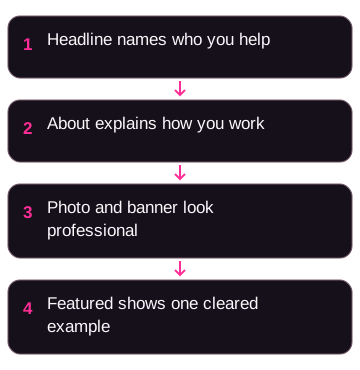
Four pieces do most of that work: the headline, the About section, the photo and banner, and Featured.
A headline that only says 'Financial Advisor at XYZ Wealth Management' answers where you work. That's useful for recruiters. It's weak for a business owner deciding whether to connect.
Try a headline that names a person, a problem, and a friction they already feel:
I help [specific client type] [with a specific problem] without [a fear they already have].
Here's an example, not wording you have to copy: 'I help tech executives make sense of equity compensation and taxes without turning every market swing into a late night.'
Use your own words. If your compliance reviewer won't approve an outcome claim, name the client type and the problem instead of the result. Tax or product language may need extra review.
Write the About section for a first-time reader
Open with who you help and the problem you work on. Then explain how you work in two or three sentences: how you start, how you plan, how you stay in touch. Credentials can wait until that picture is clear. Years in the business, designations, and the firm name belong in a short credibility line, not the whole summary.
Close with a next step you can actually honor, such as: 'If you're a [client type] thinking about [problem], send a connection request and mention it.'
Have compliance read the About section the same way they'd read a website bio.
Photos, banner, and Featured
Use a current professional headshot. For the banner, a simple graphic with your niche is easier to understand than a stock handshake. If you don't have design help, a clean banner with your name and who you serve is enough.
The Featured section is easy to leave empty. Pin one thing your reviewer has already cleared: a short video of how you work, a post that explains your process, or an anonymized example that doesn't identify a client.
If you want this to match the rest of your site, see wealth management marketing strategies.
Four kinds of posts worth writing
Random posts get random attention. You don't need a content department. You need a short list of themes you can rotate.
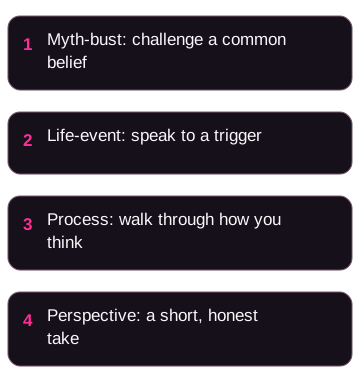
Here are four kinds that fit advisory work. They aren't ranked by reach, likes, or clients. They're writing jobs.
The myth-bust
Planning is full of rules of thumb that don't fit every person. A post that names a common belief, explains when it fails, and offers a better way to think can start a real comment thread.
Example angle: 'Maxing a 401(k) first isn't always the right move.' Then explain why in plain language, without trashing people who do it.
Lead with the belief. Spend two or three short paragraphs on the exception. Close with how you'd look at the decision. If you mention products, performance, or what clients have done, stop and send it to compliance.
The life-event hook
Equity vesting, a business sale, an inheritance, a divorce, a retirement date: those moments create new planning questions. A post that starts with the trigger helps the right person recognize themselves.
Example angle: 'If you just saw an RSU vesting schedule for the first time, here are three tax questions to ask before you sell a share.'
You're writing for people who already know that event is on their calendar. You're not claiming LinkedIn handed you a live alert.
The process post
Walk through how you think about one problem, step by step. 'Here's how I look at paying off a mortgage early' is a process post. People who aren't ready to talk yet can still see how you reason.
Keep it as your approach, not the correct answer for everyone.
The perspective post
Shorter and more human. Two or three paragraphs about a pattern you're allowed to discuss: a question that keeps coming up, or a behavior you want people to pause on. No list. No labeled framework. These often read like a person, which is the point.
What to skip
Daily market recaps ('the Fed moved today, here's what it means') make you look like you're chasing the news cycle. Generic tips that already live on every personal-finance site don't tell anyone why they should talk to you.
If a post could have come from any advisor in any city, it probably isn't earning the click to your profile.
For how this sits next to the rest of your pipeline, see how to get clients as a wealth manager and lead generation for financial advisors.
A posting rhythm you can keep
Consistency beats a burst of posts and a quiet month. That's ordinary scheduling advice, not a claim about how LinkedIn ranks you.
If you already run a full book, three posts in a week is one cadence you can try. More than that may need a writer or a batching habit. Fewer than two in a week is fine during a heavy client stretch. Just don't tell yourself you're doing LinkedIn if you only open it when you need a client.
Here's one example week, not a required calendar:
- Monday: a short text post (myth-bust or perspective)
- Wednesday: a longer process post, or a document your reviewer cleared
- Friday: a short life-event post
Change the days to match when you can reply. A post you abandon is worse than a post that goes out on Thursday.
Formats you can actually finish
- Text posts: enough room to make one point. If you write long, still make the first lines carry the idea.
- For a document post, use a short PDF, such as a checklist for new RSU recipients. Treat it as public marketing, not a private gift.
- Short text: a few paragraphs when you have one observation.
- Video: a phone and decent light is enough. Sixty to ninety seconds is a length you can finish. Don't wait for a studio.
- LinkedIn articles: a different format from feed posts. Don't assume an article gets the same visibility as a feed post. Use it when you want a page you can link to later.
If you need to send people to your site, you can put the URL in the post, put it in the first comment, or try both on your own account. Don't treat 'never put a link in the post' as a law. Don't stuff every post with a link that isn't needed.
Here's the math with made-up numbers
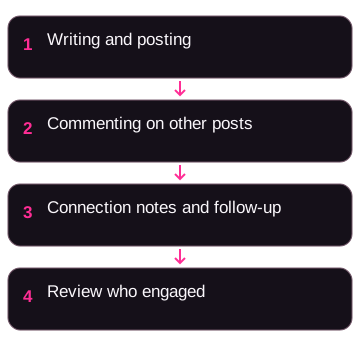
Suppose you block three hours a week into four blocks:
- 45 minutes writing and posting
- 45 minutes commenting on other people's posts
- 45 minutes on connection notes and follow-up
- 45 minutes reviewing who engaged
That's 180 minutes, or three hours.
If you value that time at $50 an hour, the week costs $150 in time. A four-week month would be $600. If that month you had two meetings that actually happened, the time cost would be $300 per meeting.
Those dollars and hours are invented. They are not LinkedIn's results, OJay's results, or a forecast. Use your own hourly cost and your own meeting count. Profile views and likes are not meetings, and meetings are not clients.
Four outreach steps that don't start with a pitch
Posting helps people recognize you. Outreach is how you start a private thread. They work together. Content is not a substitute for asking, and a cold pitch is not a substitute for being recognizable.
The usual miss is the first message: 'Hi, I'm a financial advisor. Want to book a call?' There's no context, and you gave them a reason to ignore you.
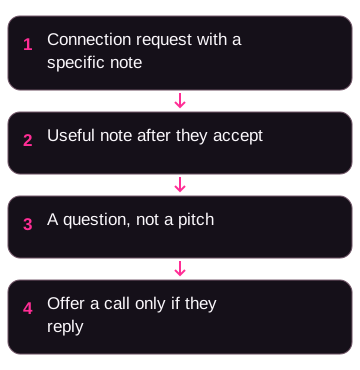
Here's a four-step sequence you can adapt. Have compliance approve the language before you send it in volume. These are sample lines, not scripts cleared for your firm.
Step 1: the connection request
Keep it short. Mention something specific: a post they wrote, a company note, a shared event. Don't pitch. Don't summarize your process.
Example: 'Hi Sarah. Saw your note about the Series B close. Congrats. I work with founders around those same milestones and thought it was worth connecting.'
Step 2: a useful note after they accept
Wait a few days. Send something helpful with no calendar link.
Example: 'Thanks for connecting, Sarah. After a fundraise, equity and taxes get messy fast. I put a short explainer together on questions founders usually ask next. No ask, just in case it's useful.'
If you attach a PDF or link, that's marketing too. Use a piece your reviewer already cleared.
Step 3: a question, not a pitch
After you've shown up once, ask something they can answer in a sentence.
Example: 'Curious whether you're already working with someone on the equity and tax side, or whether that's still on your list.'
Step 4: offer time only if they engage
If they reply, then you can offer a short call. 'Happy to spend 20 minutes on your specific situation. No obligation. Want a few times that work?'
If they don't reply, stop. Repeating the ask doesn't make it warmer.
This sequence is a way to give before you ask. It is not a proven conversion machine. It's a process your reviewer can inspect.
Start with a number of requests you can personalize. Ten specific notes beat a hundred generic ones. LinkedIn can restrict accounts that send a lot of invitations. Watch whatever limit your account currently shows, and slow down if LinkedIn warns you.
What to check before you pay for Sales Navigator
If you're considering Sales Navigator, don't buy it from a blog post. Get a current quote and a live demo of the exact plan.
Whether a paid LinkedIn seat helps you depends on the filters in that plan, the time you'll spend each week, and whether your ideal client is actually findable by title, location, and company size. I can't quote a current price, and I can't honestly tell you it pays for itself with one client. Get the price in writing. Then look at the hours you'd still spend writing notes.
Ask the salesperson, or the help docs for your plan, to show you live:
- Saved searches: job title, geography, seniority, company size, and any other filter you actually need
- Alerts: job changes, posts, or company news, and whether those alerts arrive in a way you'll check
- Lists: how many people you can save, and whether you can see recent activity
- Messaging: how you reach people you aren't connected with, how many credits you get, and what happens when they expire
- Team features: only relevant if more than one person in the firm will share the seat
The free account may be enough if you're posting, commenting, and sending a small number of personal connection requests. A paid seat is a maybe if you need tighter targeting and you will use the alerts every week. It is a no if nobody has time to follow up.
If you're thinking about high-net-worth clients beyond LinkedIn, how to attract high-net-worth clients covers a wider set of choices.
Run LinkedIn through your compliance process
LinkedIn is public. Your posts, comments, messages, headline, About section, Featured items, and profile recommendations can all be treated as marketing communications by your firm.
This section is not legal advice, not a summary of the law, and not a claim that any tactic is SEC or FINRA compliant. Your written policies and your compliance reviewer control what you can publish. Rules also differ for RIAs and broker-dealers.
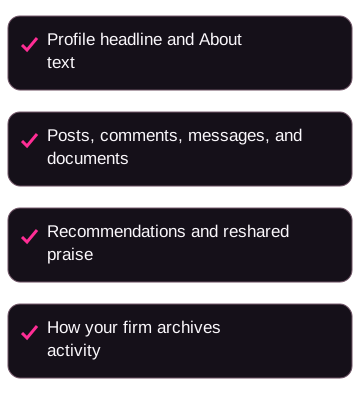
Have your reviewer look at four things before you scale:
- Profile headline and About text, including any results language
- Posts, comments, messages, and documents
- Recommendations and reshared praise, including tags and screenshots
- How your firm archives LinkedIn activity
If a client posts a glowing recommendation, don't assume you can leave it up, pin it, or reshare it. Ask your reviewer. The same goes for screenshots of praise, 'top advisor' language, and any line that implies how clients have done.
Avoid promising results. Avoid calling yourself best, top-rated, or leading unless your reviewer has approved the backup. Don't name clients or give details that identify them without the consent your firm requires.
For RIAs, have your reviewer use the same SEC marketing materials they already use for your website. A public starting point is the SEC's investment adviser marketing guide. For broker-dealers, start with your firm's social media policy and whatever FINRA notices your reviewer uses, such as FINRA Notice 10-06. Those links are places to begin a review, not a do-it-yourself sign-off.
The safest habit: new formats go to compliance before you post them at scale. Keep a simple checklist so old formats don't drift.
Referral activity on LinkedIn still needs the same care as any other referral. See referral marketing for wealth managers.
How to stay visible without posting more
Your posts are only part of the week. Comments on other people's posts put your name in front of their readers.
Skip 'Great post.' Add a point, a caveat, or a question. Write it as something you'd say in a meeting. If it turns into advice for that person's finances, you may have crossed a line your reviewer cares about. Keep comments educational and general unless your firm says otherwise.
When someone in your market posts about a role change or a business milestone, a prompt, specific comment is easier to notice than a comment that arrives a week later. Set whatever notifications you actually check. Don't treat 'comment in the first hour' as a ranking rule. Treat it as showing up while the thread is still alive.
You can follow people without connecting. That lets you read and comment before you send a request. It can make the later note less cold. It doesn't guarantee they'll accept.
Reply to comments on your own posts when you can. A real back-and-forth is the point, not a stopwatch. If you only post and never return, people stop bothering.
A seven-day LinkedIn reset
You don't have to rebuild everything at once. This is one way to get a usable profile, a small content bank, and a light outreach habit in a week. It is a work plan, not a promise that you'll have clients on day seven.
Day 1: rewrite the profile
Headline, About, photo, banner. Send the copy to compliance if that's your firm's process.
Day 2: write five drafts
One myth-bust, two process posts, one perspective, one life-event hook. Don't publish yet. The point is to stop drafting under panic.
Day 3: write down who you're trying to reach
Job titles, seniority, geographies, company types. If you already have Sales Navigator, build a saved search only after you've confirmed those filters exist in your plan. If you don't, use free search and save a small set of profiles, such as 20, so the list is finite.
Day 4: send your first 10 connection requests
Personal notes. No pitch. One specific sentence about them, one sentence on why connecting is reasonable.
Day 5: publish one post
Use a draft that's already cleared. Post at a time you can come back the same day and reply.
Day 6: leave 10 real comments
Look at posts from people you want to know, or from adjacent professionals (CPAs, estate attorneys, M&A people) if that's how your introductions actually happen. Perspectives, not compliments.
Day 7: put LinkedIn on the calendar
Look at what you actually finished. Set a recurring block you can keep, such as three short sessions a week: one to post, two for outreach and comments. Treat it like other client-facing work, or it will lose to whatever feels urgent.
If the week slips, restart on Day 1. The habit is the point, not a streak.
What to do this week
LinkedIn for advisors is not a media brand. It's showing up in front of the right people, sounding like you understand their situation, and asking for a conversation after you've been useful.
Pick one profile change and one outreach habit. Get the language in front of compliance before you scale either one.
If you want people arriving through your own site and ads as well as LinkedIn, that's the kind of marketing we build at OJay Media: pages, ads, questions before a booking, and follow-up under your firm's name. We have a commercial interest in that work. It isn't the same thing as posting more on LinkedIn, and it still takes time, money, testing, and follow-up. You can compare that path with a LinkedIn-only habit, or use both.
OJay Media is a marketing agency for wealth advisors. This article is educational marketing. It is not investment advice, and it is not a compliance opinion.
More on the wider picture: lead generation for financial advisors, how to get clients as a wealth manager, and how to attract high-net-worth clients.
A few common questions
How many connections do I need before LinkedIn is useful?
There's no magic number. A smaller list of people in your actual market is more useful than a large list of strangers you never talk to. I can't show you a study that proves a threshold. Build the right list and a cadence you can keep.
Should I use LinkedIn Premium or Sales Navigator?
They're different LinkedIn products with different quotes. If you're mainly posting and commenting, start with the free account. If you think you need tighter filters and alerts, ask which product you're being sold, what you actually get, and the price in writing. Don't assume a Premium plan is the same thing as a prospecting seat.
Can I post client testimonials on LinkedIn?
Don't, until your compliance reviewer says how your firm handles them. That includes profile recommendations, screenshots, and a client commenting 'best advisor.' RIA and broker-dealer policies differ. This article doesn't authorize testimonials and doesn't make them compliant if you add a disclosure sentence you wrote yourself.
How long until LinkedIn produces clients?
I don't have a trustworthy timeline, and I won't invent one. You may get a conversation quickly, or you may spend weeks with no replies. Agree on a review date, count conversations and meetings separately, and don't call the test a failure after three unanswered notes. Also don't call it a success because a post got likes.
What's the biggest mistake advisors make on LinkedIn?
Pitching in the connection request or the first message. Show that you understand their world before you ask for a meeting, and let your reviewer see the words you'll use.