Growing a financial advisory practice is not one marketing trick. You need a target you can measure, a clear picture of who you help, a way to start conversations that does not depend on one referral source, and enough capacity to serve new people without ignoring the ones you already have.
If the practice is working and growth has still flattened, start by checking capacity and follow-through.
Key takeaways
Write a 12-month target in clients, fees, and capacity before you add a channel or a hire.
Say who you help so the right people can recognize themselves. That is a marketing choice, not a claim that specialists always earn more.
Referrals are useful. They are a weak plan if they are the only plan.
Put repeatable work into tools and a written process before you hire someone to figure it out.
Count contacts, conversations, attended meetings, and clients separately. Have your compliance reviewer approve anything you publish, promise, or send.
Why a busy practice still stalls
You can have happy clients, a few referrals, and still feel stuck. Every new household takes time you were using to serve someone already on the books. You stay inside the work all day, so you never build the next conversation.
Check these parts of the practice before adding another campaign.
You will talk to anyone. Your site and your first call then sound like every other firm, so people compare you on convenience and price.
You wait on word of mouth. When a referral source retires, gets busy, or has a slow year, your calendar thins out and you have no other way to start a conversation.
The process lives in your head. Onboarding, planning, and follow-up only move when you remember them. You cannot add people, or staff, on top of that.
You hire before the work is written down. The new person spends their time asking you what to do, so cost goes up and your time does not come back.
None of that is fixed by posting more often. You fix it in order: target, who you serve, how conversations start, how work gets done, then who you hire.
Write three numbers before you change anything
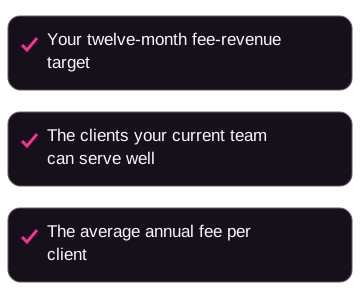
Before you buy ads, rebuild the website, or post a job, write down three numbers.
How much fee revenue you want in 12 months. Not an AUM headline. Fees.
How many clients your current way of working can serve well. If you do not know, count the hours you already spend on reviews, planning, and service, then be honest about what is left.
What a client pays you in a year, on average, with the work you actually do for them.
More households is not automatically better. Here is a made-up example with two fee mixes.
Say one mix is 200 clients paying $3,000 a year. That is $600,000 in fees. Another mix is 80 clients paying $8,000 a year. That is $640,000 in fees. Same ballpark of revenue. Very different calendars. These are invented figures, not a typical firm and not a recommendation to raise fees.
Do not turn AUM into revenue in your head. AUM is not a fee. A fee is not profit. Subtract the cost of serving those people, including your time, before you call the target a raise.
Write the 12-month line in plain language: by this date, I want about this many clients, paying about this much per year, and I can name who handles the extra work. Everything you add after that has to serve that line.
Choose who you want to help
The easiest way to make marketing clearer is to stop trying to sound useful to everyone.
A niche is not a cage. It is a sentence a real person can recognize. "I help dentists who own a practice" is easier to repeat than "I help families pursue their goals."
Look at your top 20 clients by fees, not by friendship. Do several share a job, a life stage, or a money problem you already know how to handle? That overlap is a better starting point than a trendy list.
You might focus on people approaching retirement, owners planning a sale, tech workers with equity, physicians, people rebuilding after a divorce or a death, or federal employees. Those are examples of specificity, not a ranking of best niches.
Once you can name the person, your website, your articles, and your outreach can talk about their actual situation. For positioning aimed at wealthier households, see how to attract high-net-worth clients.
A niche also gives other professionals a cleaner handoff. A CPA who works with dentists would rather send those clients to someone who already speaks that world. That still only works if you stay useful to the CPA, not if you collect a logo on a partners page.
Get conversations from more than one place
A practice that only grows when someone happens to mention you is fragile. One slow year from a key CPA, one cluster of clients who are the same age, and the pipeline thins out.
You want more than one way a fit person can start a conversation, and you want those ways to keep moving when you are in client meetings.
A delivered contact, a booked appointment, and a meeting that actually happens are three different things. Keep separate counts. A client is a fourth count.
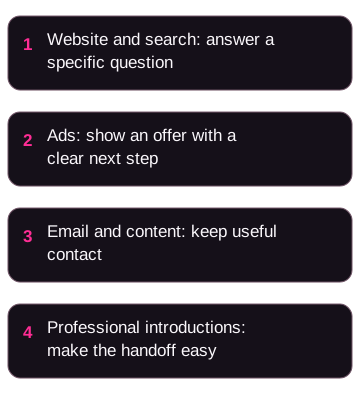
Your website and search
Your website should say who you help, what the first engagement looks like, and how to take a next step. A page that only lists credentials asks the visitor to do too much work.
Search can send people over time if you publish pages that answer questions those people already type. It is slow. It is not a prize you are owed. See SEO for financial advisors and financial advisor website design that converts.
Do not plan your year on a ranking you do not have yet.
Ads
Paid ads can put your offer in front of people sooner than waiting on search. Search ads can catch someone already looking. Social ads can reach a defined group if your targeting, landing page, and follow-up are ready.
Ads can lead to conversations. Turning those into clients still takes work. If nobody owns the follow-up, you are paying for names you will not reach. Read Facebook ads for financial advisors and Google ads for financial advisors. Have compliance review the ads, the landing page, and what you say on the first call.
Email and content
Useful articles, short videos, and a regular email give people a reason to remember you before they are ready to talk. A physician who reads a clear note about a practice retirement plan is informed. She still has to choose you.
Email marketing for financial advisors covers how to use a list you already have permission to email. There is no channel that always returns the most money. Track replies, bookings, and clients from the list you actually send to.
Professionals who already serve the same people
If you want business owners, spend time with the people they already trust: transaction attorneys, business brokers, CPAs who work with small companies, commercial bankers.
Do not count lunches. Count introductions that turned into conversations. One CPA might send work. Another might send none. Build a short list, give them something useful on a schedule they can count on, and make the handoff easy.
Put the repeatable work into tools first
Software does not replace you. It keeps you from retyping the same steps and losing follow-up in a notebook.
Before you hire, write down the work that repeats: new-client paperwork, meeting prep, tasks after a review, billing, signatures, scheduling, and the emails you send after someone asks for a call.
Then look for tools that do that work in the open, where someone else could run the process if you were in meetings all day. Look at a CRM, planning software, portfolio reporting and billing, file and signature tools, a scheduler, and email follow-up.
You will hear product names in those categories. Features and prices change. Ask for a current demo using your actual workflow. Ask where client data lives, who can see it, and what you can export if you leave. Do not buy a stack because another advisor listed theirs on a podcast.
Staff walk into a written process much faster than they invent one while you are on the phone. That is ordinary operations, not a productivity study.
Hire when a task is eating the time that brings in work
Hire when you can point at work that does not need you, and you can name the higher-value work you would do with that time. Do not hire because you feel underwater and hope a new person will sort it out. Do not hire because you crossed a round AUM figure.
Use four checks before you post the role.
- List the tasks you would hand off.
- Estimate the hours those tasks take.
- Name the work you would do with that time.
- Compare the full hiring cost with the fees that work might create, including the risk that it produces no new fees.
The first hire
Consider a client service associate when you need someone to own paperwork, transfers, scheduling, onboarding files, routine client messages, and the basic tasks your compliance process already defines.
Here is a made-up example. Suppose the hire costs $55,000 a year in salary, before benefits and tax. Suppose that person takes 12 hours a week off your calendar. If you use that time to take on two extra clients paying $8,000 a year, that is $16,000 in new fees. That does not cover $55,000. The hire would need to free work that produces more fees than it costs, or it is a service decision you are funding on purpose. Run this with your salary, your fees, and your hours. Invented numbers are not a forecast.
The second hire
Once the first person is fully used, consider whether a paraplanner or associate advisor could handle plan drafts, meeting packets, research, and, later, parts of a planning meeting under your supervision.
If that person will give investment advice, your firm has to confirm the registrations and supervision that apply. That is not something to settle from a blog post. Build study time and compliance setup into the hiring plan, and ask your compliance officer or counsel.
Write the standards down
At one person, how we do things is just you. At three people, it is a guess unless you write it down. Examples of standards: we log every client conversation in the CRM the same day; we return routine client calls within one business day. Hire people who will keep those standards. Make those habits part of the role from the start.

Stay in touch before clients have to chase you
New clients and kept clients are both growth. If you only hunt for new people, you can add households and still go backwards when someone quietly leaves.
Here is a made-up example, not a study. If a client paying $10,000 a year leaves, two new clients paying $5,000 a year replace the fees, not the relationship. You still spent time and money to get those two conversations. You still have to serve them. AUM did not turn into profit in this example, because we never left fees.
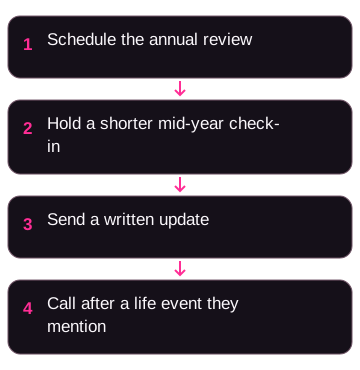
A simple contact rhythm has four parts.
An annual review on the calendar for every client, not when they ping you.
A shorter mid-year check-in, even 15 minutes, so the year is not one long silence.
A written update your team can send on a schedule, with compliance review.
A call within a few weeks when a client mentions a job change, a health event, or a family change.
A birthday note is optional. The point is that they hear from you before they start wondering what they pay for.
People leave for many reasons, including price and a feeling that nobody is home. You cannot control every reason. You can control whether you went quiet.
If you send a would-you-recommend-us score from 0 to 10, treat a low score as a reason to call, not as a grade that proves the firm is healthy. Ask compliance how you may survey clients and how you may use the answers in marketing. Do not publish quotes or scores unless that review says you may.
Make referrals a process, not a hope
Clients refer when they know who you help, they are asked at a moment that makes sense, and the handoff is easy. None of that is luck, and none of it is guaranteed.
Asking clients
Ask after a real piece of work landed, not at the end of every meeting. We just finished that retirement-income plan. If a colleague is in the same spot, I am glad to talk with them. That is a request, not a script you have to copy.
Give them a one-page note on who you help and what the first conversation includes, so they are not stuck explaining you.
Thank them when they make an introduction. If you give a gift, a dinner, or a donation, ask compliance what is allowed before you do it. Do not copy someone else's thank-you habit.
Stay useful to CPAs and attorneys
CPAs and estate attorneys sit with people at tax time, a sale, or an inheritance, which is often when planning is on the table. Mortgage brokers, divorce attorneys, and commercial real estate people can be useful too, depending on who you serve.
Be a resource on a schedule: a short, reviewed note on a topic they care about, a fast answer when they email, a clean way to introduce a client. Then count the introductions, not the coffee.
See referral marketing for wealth managers.
Spread revenue so one fee type cannot sink the year
If almost all of your income is an AUM fee, a down market cuts revenue even when nobody left. That concentration is a business risk. It is not a reason to invent a new fee on your own.
Some firms add a planning retainer, a monthly planning fee, or a project fee for a defined piece of work such as a retirement-readiness review or an equity-compensation analysis. Some run a workshop or a small group for people at the same life stage. Those can make income less tied to last quarter's market, and they can give a younger household a way to work with you before they have a large account.
They can also confuse clients, clash with your current agreements, or create advertising issues if you describe them badly.
Get the full fee, term, and what the client receives in writing. Have compliance review how you charge, how you disclose it, and what you say in public. Do not treat a mix like 70 percent AUM and 30 percent retainers as a target you must hit. That split is just a way to think about concentration. Use your actual numbers.
If you are looking at revenue sharing with other professionals, stop and ask counsel or your compliance officer first. What is allowed depends on your firm and your registrations.
Plan the next 90 days, not ten ideas at once
A long strategy deck does not grow the practice. A short list you actually finish might.
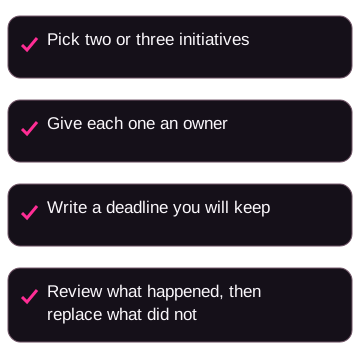
Every quarter, pick two or three growth initiatives. Give each one an owner, a finish date, and a result you can count without fooling yourself: conversations started, meetings held, onboarding time in hours, not more brand awareness.
The diagram in this section shows the method. Here is a made-up worksheet with three example initiatives, not a report from a real firm.
Advisor and whoever helps with marketing: publish a LinkedIn series through the end of the quarter. Count follows only if you also count email opt-ins or booked calls. Followers are not clients.
Advisor: build a list of CPAs who already serve your niche and book introductory meetings. Count meetings held.
CSA and advisor: move onboarding steps into the CRM so a new client is not waiting on you to remember the next form. Count days or hours, before and after.
At the end of the quarter, keep what produced conversations or saved real time. Drop what produced nothing. That is information, not a personal failure.
A simple annual rhythm: in January, review last year's counts and write this year's fee and capacity targets. In April, look at what you spent to get each attended meeting. In July, check whether a hire is still justified. In October, set the next budget with the numbers you have, not the numbers you hoped for.
For a way to plan marketing spend, see financial advisor marketing cost. Treat any figure there as a starting point for your own quote, not as your budget.
Mistakes that quietly stall growth
Hiring too early means you added cost before the work could pay for it. Hiring too late means clients already felt the delay.
Launching a new website with no point of view. Pretty pages that speak to everyone give a stranger nothing to recognize.
Never emailing people who already asked to hear from you. A list you do not write to is not an audience.
Calling marketing an expense and then refusing to count meetings and clients against what you spent. Counting does not make the spend worth it. It tells you whether to keep it. There is no safe return ratio.
Here is a made-up example. $3,000 a month in marketing cost is $3,000 that month. If that month also produced $15,000 in new annual fees, you still have not measured clients, the cost of serving them, or whether those fees continue. Do not call that a 5 to 1 return. It is not. See the cost article above and use your own numbers.
Skipping a written plan the client can see. If the relationship is only a quarterly statement, it is easier for them to leave in a rough market. That is a service observation, not a retention statistic.
Starting five initiatives. Finish two.
Raising or lowering fees from a rumor about what the industry will accept. If you change fees, model the revenue with the clients you think will stay, the work you will still do, and the cost of replacing anyone who leaves. Do not assume only a small slice will go.
A few common questions
How long does it take to grow a practice from a smaller book to a larger one?
There is no honest standard timeline, including any three-to-five-year story you have heard. It depends on who you serve, how many conversations you can start and complete, how much room you have to onboard people, and what you can spend without starving service. Set a review date and judge the plan against meetings and clients, not against someone else's AUM story.
What is the fastest way to get new clients?
Nothing reliably produces clients on a clock. Paid ads can start conversations sooner than waiting on search rankings. Search and referrals can keep sending people after a campaign stops. In every case you still need follow-up, a first meeting that happens, and a fit. Use more than one channel if you can staff the follow-up. That still does not promise a client count.
When should a solo advisor hire the first employee?
When you can list the tasks someone else would own, estimate their hours, and name the work you would do with that time. Do not wait until clients feel ignored. Do not hire because you hit a round AUM number. Run the salary against the fees that extra time could reasonably create, including benefits, tax, and training.
Which fee model is best for growth?
There is not a best mix. Write down where your revenue comes from now. If almost all of it moves when markets move, talk with compliance and operations about whether a planning fee or a defined project fee fits work you already do. Do not copy another firm's split. Do not describe a new fee in public until it is reviewed.
Do I need digital marketing?
People look you up. If the site does not say who you help, referrals and ads have to explain you from scratch. Digital marketing does not replace relationships. It is the layer a stranger, or a referred person, uses to decide whether to reply.
Should I hire a marketing agency?
It can make sense when you have a niche, a site that can take traffic, a budget you can keep, and better uses for your week than learning ads or search yourself. Ask who does the work, what you own if you leave, and how compliance review is handled. Use how to choose a financial advisor marketing agency as the evaluation list. We do this work, so treat the guide as questions to ask, not as a result we are promising.
What is a realistic first-year growth target?
Do not copy a percentage from an article. Set the target from your starting client count, your capacity to serve more people well, and a marketing budget you can sustain. Write the review date before you spend.
What to do this week
Write the three numbers. Circle the client overlap in your top 20 by fees. Name who owns follow-up for a new conversation. Put one 90-day initiative on a date.
If you would rather not run every channel yourself, the agency guide above is a buying checklist. OJay Media builds the pages, ads, questions, and follow-up around a firm's own name, so we have a commercial interest in that option. It is not the same product as buying a list of introductions, and it still takes time, money, testing, and someone to pick up the phone.
This article is about marketing and practice operations. It is not investment, legal, tax, or compliance advice. Have your firm's compliance reviewer approve anything you publish or send.