A booked appointment is not a new client, and a matched introduction is not a booked appointment.
SmartAsset's public AMP pages describe investor matching, introductions, and follow-up tools. Apex Acquisition's public site describes marketing that puts meetings on your calendar. Confirm that still matches what each company is selling you today.
Which one makes sense depends on the quote, the people you want to work with, and what your team can do after a name arrives or a meeting hits the calendar.
A booked appointment is not a new client
From a new name to a new client, a few things still have to happen. Track each step separately.
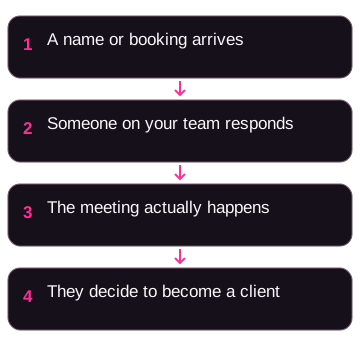
A contact or a booking is only the start. Someone still has to have a conversation. The meeting still has to happen. Then that person still has to choose to become a client.
Keep four counts:
- Contacts or bookings delivered
- Conversations that actually started
- Meetings that people attended
- New clients
If you mix those together, a cheap introduction can look expensive, and an expensive booked meeting can look cheap. You will not know which, because you measured two different things.
A no-show is not a close. An unanswered call is not a qualified lead. Put those in their own columns.
What are you actually buying from each one?
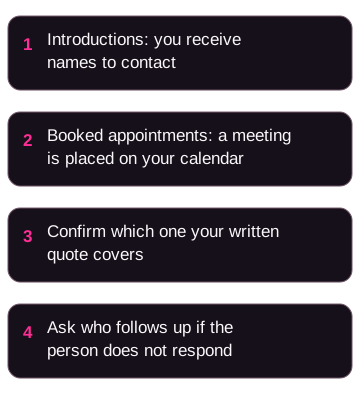
Start with the service itself. It makes little sense to compare two prices if one is paying for names and the other is paying for meetings on a calendar.
Ask both companies to walk you through one person, from the first form or ad they see to the information you receive. Then have them show you what happens when that person does not answer, does not show up, or is not a fit.
SmartAsset
Treat SmartAsset as a referral and matching option until they prove otherwise in your quote. SmartAsset's public AMP page describes matching fiduciary advisors with investors, introductions, and built-in call, email, and tracking tools. Ask whether you are buying introductions, live connections, follow-up tools, or some combination. Ask how a person is matched to you, what they were told, and who else may receive the same details.
See also our Advisor Jetpack vs SmartAsset comparison to compare SmartAsset with the coaching and campaign work in an Advisor Jetpack proposal.
The practical question: once a name arrives, who on your team contacts them, and do you need the vendor's follow-up tools or do you already have that covered?
Apex Acquisition
Treat Apex Acquisition as marketing that books appointments until they prove otherwise in your quote. Apex's public homepage describes booked appointments on your calendar rather than sending names for you to dial. Its terms of service page lists targeted online advertising, lead generation funnels, appointment setting, sales training, and CRM access. Ask whether you are buying ads, messaging, pages, booked appointments, help on the sales conversation, or some combination. Ask who funds advertising, who owns the creative, and what counts as an appointment.
See also Apex Acquisition vs Advisor Jetpack to check how an Apex proposal differs from an Advisor Jetpack proposal.
The practical question: when a meeting hits the calendar, who confirms it, who handles a no-show, and who keeps talking to people who are not ready yet?
Do not assume the labels mean the same thing at both companies. Ask each one to define a lead, a connection, a booked appointment, and an attended meeting in writing.
How to compare cost without a public price list
Get a current written quote from both.
You need the full cost and the minimum commitment before you can make a useful comparison. If the public page does not list a complete price, request a written quote. If a page points you to a demo instead of a dollar price, that is a prompt to ask, not a number you can budget against.
Ask each vendor to itemize:
- Setup or onboarding fees
- Monthly or campaign fees
- Any per-introduction or per-appointment charges
- Advertising you are expected to fund
- Tools, extras, and taxes
- The minimum term, renewal, and cancellation deadline
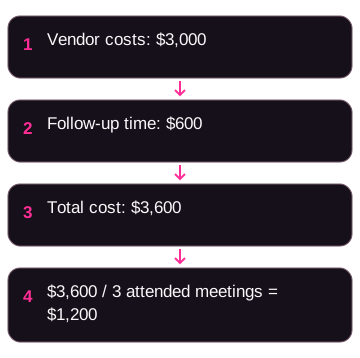
Then add your team's time. A cheap introduction gets expensive if someone spends hours chasing a person who never meets with you. A booked appointment gets expensive if your advisor blocks two hours and nobody arrives.
Here's the math with made-up numbers.
Example A: an introductions quote
Assume $3,000 in vendor costs for the period. Follow-up takes 10 hours at $60 an hour, which is $600. Total cost is $3,600. Three meetings actually happen.
$3,600 divided by 3 attended meetings is $1,200 per attended meeting.
These are invented figures, not prices or results from either company.
Example B: a booked-appointment quote
Assume $8,000 in vendor costs for the same length of time. Follow-up and confirmation take 6 hours at $60 an hour, which is $360. Total cost is $8,360. Five meetings actually happen.
$8,360 divided by 5 attended meetings is $1,672 per attended meeting.
Again, invented figures. Your quote will differ.
Example A looks cheaper per meeting. That still does not tell you which one is better. The people who attended may not be a fit. One new client from Example A would mean $3,600 in acquisition cost for that period. No new clients would mean you spent $3,600 without winning business yet.
Do the same check on Example B. One new client would mean $8,360 in acquisition cost. Zero new clients would mean you spent $8,360.
Then keep going with your own numbers. How many of those meetings became clients? What did it cost to bring each client in? How long will their fees take to cover that cost, after the expense of serving them? Use your firm's records for that. Do not turn assets under management into revenue, or revenue into profit, unless those figures are actually in your books.
Use the same definitions for both services. Count attended meetings the same way, include the same types of costs, and allow for the time between a first conversation and a signed client. Otherwise you are comparing two different things.
Keep the counts in your CRM so you can reconcile vendor reports with what actually happened.
Confirm no-shows, ownership, and who confirms the meeting
You do not need a generic vendor scorecard. You need answers that match this comparison.
What counts as booked versus attended?
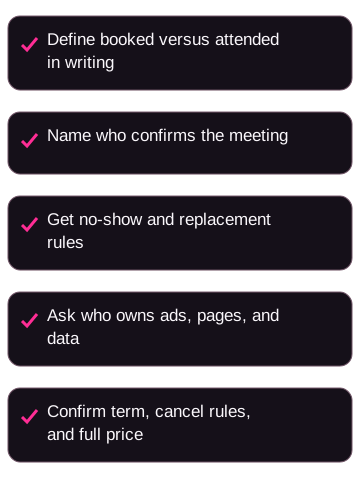
Ask each vendor to define a booked appointment and an attended meeting in writing. A calendar hold is not attendance. If you pay for bookings and measure attendance, you will think the service failed when you actually measured two different things.
Who confirms the meeting?
Name the person. Ask whether the vendor sends reminders, whether your team does, and what happens the morning of the meeting. If nobody owns confirmation, no-shows are unsurprising.
What happens on a no-show?
Get the replacement, credit, and reschedule rules in writing. Ask who contacts the person afterward. A vague promise to make it right is not a policy.
Who owns the ads and pages?
If campaigns are part of the quote, ask who pays for ads, who owns the creative and landing pages, and what you can keep or export if you leave. For matching and introductions, ask what data you receive and what you can keep after the contract ends.
What are you committing to?
Confirm the total price, start date, minimum term, renewal, cancellation deadline, and what access you lose if you cancel.
Apex Acquisition's public terms of service page, checked September 7, 2026, describes an initial 90-day term starting when ad campaigns launch, then month-to-month. It also says that on cancel, access to the CRM, training, and community is removed. Confirm whether that page applies to your agreement. Do not treat website terms as a substitute for the signed contract.
If the answers are vague, ask for specifics before you sign. An unclear answer does not become clearer once the invoice arrives.
Choose which proposal to examine more closely
Look more closely at SmartAsset if you want introductions and matching, and you need to see whether follow-up tools are included in the quote. Ask for a walkthrough using the kind of person you actually want to work with.
Look more closely at Apex Acquisition if you want marketing that puts meetings on the calendar, and you already have a way to run those meetings. Ask who owns the ads, the pages, and the no-show process.
If nobody has time to follow up, fix that first. Buying more names does not give your team more hours.
If your calendar is already full of meetings you cannot prepare for, fix that first. Buying more bookings will make the pile worse.
These are starting points for your decision. We haven't run a head-to-head test of the two services, so I can't honestly tell you one will produce better clients for your firm.
What if you want people finding your firm on their own?
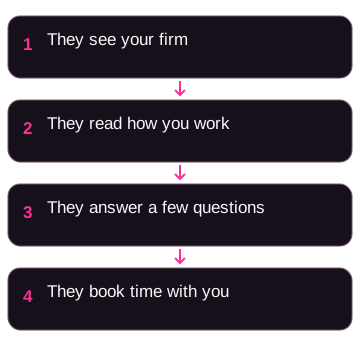
There's another option worth understanding: build a way for people to find your firm, learn why they might work with you, and apply for a conversation.
That's what we work on at OJay Media. We build the website pages, ads, qualification questions, and follow-up around your firm, under your name.
The aim is for people to understand what you do before they speak with you. Building this still takes time, money, testing, and follow-up. It does not replace the need to answer the phone and run a good meeting.
You can compare that investment with buying introductions or booked appointments, or use both. What matters is knowing what you own, what you're paying for, and whether it brings in clients at a cost your business can support.
OJay Media offers this kind of marketing service, so we have a commercial interest in this alternative. It isn't the same product as buying leads or appointments from either company.
Want to see how we'd build this around your firm? See how our process works, then decide whether a conversation makes sense.
A few common questions
Is Apex Acquisition better than SmartAsset?
Not automatically. They may not even be selling the same thing. Compare the written scope, who you will meet, who else gets the details, total cost, who confirms meetings, who follows up, and how no-shows are handled. Then match that against what your team can actually do.
Does a booked appointment mean the person will show up?
No. A booking is a calendar event. Count people who actually attend. Ask what happens when someone cancels, does not show, or was never a fit, and who is responsible for that follow-up.
Does either service guarantee new clients?
SmartAsset's public AMP page says AMP does not guarantee clients, revenue, or asset growth. For Apex Acquisition, ask in writing whether any part of the quote promises clients, show-ups, or revenue. A booked appointment is still not a client.
Can I just compare the price per lead or per appointment?
Use it as one part of the comparison. Include setup fees, ad spend, tools, your team's time, and the number of meetings that actually happen. Then track how many people become clients. Price per lead and price per appointment are not the same unit.
How long should I test either service?
Agree on a budget and a review date before you commit. Leave enough time to see what happens after the first conversation, and check the contract's minimum term. A few unanswered calls or one no-show are not enough to judge the whole service.
What should I ask both sales teams?
Ask them to walk you through one person from beginning to end: what the person was told, how their information was checked, who else gets it, what you receive, the full cost, who confirms the meeting, who owns the ads and pages, and what happens when the details are wrong or the meeting does not happen.
If you want to reuse a vendor's story or numbers in your own marketing, have your compliance reviewer approve it first. Don't treat a vendor's process description as approval for your firm.
More comparisons for financial advisors